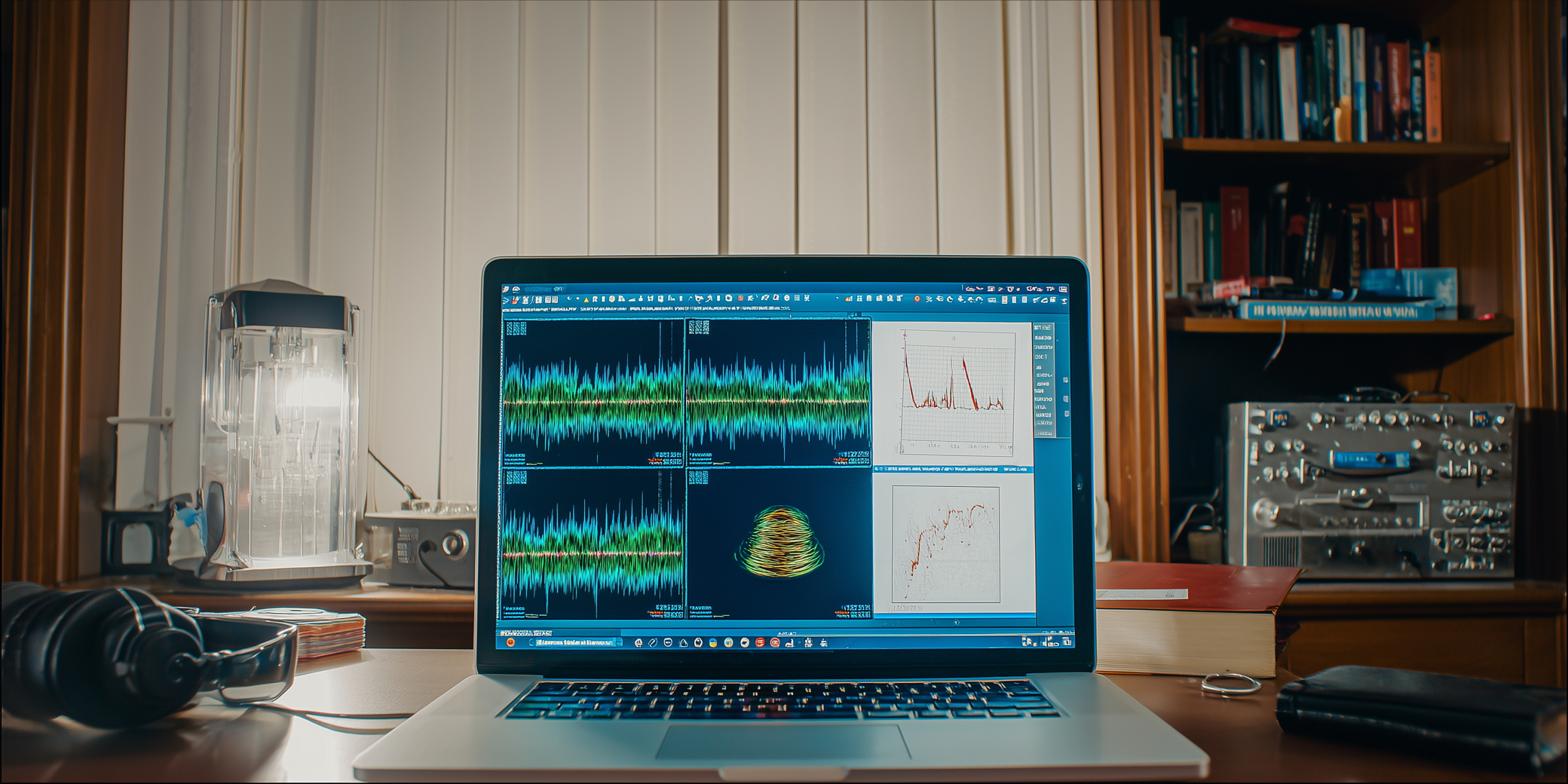
Producer’s ear 3.0: the guide to using reference tracks to achieve a professional level

Why doesn’t your music sound like theirs?

You’ve spent hours on your new track. The arrangement is solid, the sounds are unique, and the mix seems pretty good to you. But when you play it next to a professional track from your favorite artist, something feels off. It lacks that polished, powerful punch you hear on streaming platforms. The bass isn’t as tight, the highs aren’t as crisp, and the overall volume is… well, lower. The gap between your music and theirs often comes down to one critical, often overlooked practice: using reference tracks.

This article is your guide to mastering the art of referencing. It’s not about copying someone else’s work; it’s about using professional mixes as a blueprint to train your ears, identify your mixing weaknesses, and make informed decisions. We’ll show you how to listen like a pro and use this simple but powerful technique to elevate your music to a professional standard.

Day 1: The foundation – choosing the right references

The first step to effective referencing is choosing the right track to compare against. A bad reference track will lead you down the wrong path.

Your mission:

  1. Be genre-specific: Pick 2-3 tracks that are in the exact same genre and subgenre as your track. If you’re making melodic techno, don’t use a deep house track as a reference.
  2. Choose high-quality audio: Use a high-quality file format (WAV or FLAC) or a high-quality streaming service (like Spotify Premium or Tidal). A low-quality MP3 will give you a flawed comparison.
  3. Find the “vibe”: Choose a track that has the sound and feel you’re aiming for. It should have a similar arrangement, a similar energy level, and a similar sonic signature.

Why this matters: The right reference track acts as a goalpost, giving you a clear, objective target to aim for during your production and mixing process.

Day 2: The process – A/B testing with purpose

A/B testing is the core of referencing. It’s the act of switching between your mix and the reference track to compare them.

Your mission:

  1. Set up for a level match: Load your reference track into a separate audio channel in your DAW. Crucially, reduce its volume so it matches the perceived loudness of your mix. Your mix might sound louder just because it’s quieter and less compressed, so be careful.
  2. Listen in short bursts: Don’t listen to a full song. Loop a short section (e.g., the drop) and switch back and forth between your track and the reference every few seconds.
  3. Focus on specific elements: Don’t try to hear everything at once. Focus on one element at a time.
    • The low-end: Does your kick drum have the same punch and weight? Is your bassline as clear and present?
    • The midrange: Is your lead synth or vocal cutting through the mix like theirs?
    • The high-end: Are the hi-hats and cymbals as crisp and clear? Or do they sound harsh?

Why this matters: A/B testing allows you to make quick, objective comparisons, training your ears to hear the subtle differences that separate an amateur mix from a professional one.

Day 3: Going beyond the mix – referencing for arrangement and sound design

Referencing isn’t just a final mixing tool. It can and should be used throughout your entire production process.

Your mission:

  1. Reference during arrangement: When you’re stuck on an arrangement, listen to your reference track. How long is their intro? Where does the breakdown start? When do they introduce the main melody? Use their structure as a guide for your own track.
  2. Reference for sound design: Can’t get your bass to sound right? Find a reference track with a bass sound you love. Deconstruct it mentally: is it a sub-bass? Does it have a lot of midrange? Is it distorted or clean? Use these insights to guide your own sound design.
  3. Reference for effects: Are you using too much reverb? Too little? Listen to how the reference track uses effects. Do the vocals have a lot of delay? Does the kick drum have any reverb on it?

Why this matters: Integrating referencing into your workflow from the beginning prevents you from going too far down the wrong path and saves you valuable time later on.

Day 4: Final checks – the mastering reference

Before you send your track off to be mastered, a final reference check can ensure your mix is master-ready.

Your mission:

  1. Check for dynamic range: Look at the waveforms of your track and the reference track. A professionally mastered track will have a full, dense waveform, while your unmastered track will have more peaks and valleys. If your track’s waveform looks too compressed, it means your mix is likely too loud and needs a rethink.
  2. Check the stereo field: Use a stereo visualizer in your DAW. Does your mix have a similar width to the reference? Is your low-end in the center, or is it too wide?
  3. Check on different systems: Listen to both your mix and the reference on a variety of systems: laptop speakers, headphones, car stereo, etc. If your bass disappears on your laptop speakers but the reference’s bass is still audible, you might have a problem.

Why this matters: Referencing at the final stage helps you iron out any last-minute issues and ensures your track is well-balanced and ready for the mastering process.

The final polish

Using reference tracks is a skill that takes practice, but it’s one of the most effective ways to level up as a producer. It teaches you to listen critically, make deliberate choices, and close the gap between your passion project and a professional-grade track. Stop guessing, start comparing, and watch your music transform.

Creative sidechaining: beyond the kick and bass

The classic pump, reinvented

You already know the classic trick: you put a compressor on your bassline, feed the kick drum into its sidechain input, and voila—every time the kick hits, the bass “ducks” out of the way. This creates that signature “pumping” effect that gives electronic music its rhythmic energy. But what if we told you that sidechaining is one of the most versatile and creative tools in your arsenal, capable of much more than just a clean low-end?

This article is your guide to thinking outside the box with sidechaining. We’ll explore unconventional ways to use this technique to add movement, rhythm, and dynamic interest to your tracks. Forget just the kick and bass; we’re going to apply this power to vocals, synths, effects, and more. Ready to discover the true creative potential of this essential tool?

Day 1: The rhythmic synth pad

The “pumping” effect of a sidechain isn’t just for bass. Applying it to a pad can make a static, boring chord sound incredibly rhythmic and alive.

Your mission:

  1. Set up the classic: Take a simple, sustained synth pad. Route your kick drum to its sidechain input. Use a compressor with a fast attack and a fast release. Listen to the classic pumping effect.
  2. Use a rhythmic trigger: Now, instead of the kick, use a different sound to trigger the sidechain. Try a shaker loop, a hi-hat pattern, or even a short percussion hit. Listen to how the pad’s rhythm now follows the new, more intricate pattern.
  3. Automate the effect: Automate the compressor’s dry/wet knob or the sidechain’s amount to gradually introduce the effect during a build-up. This adds tension and makes the sound feel like it’s growing in intensity.

Why this matters: This technique turns a static sound into a rhythmic element, giving your track more energy and a sense of constant motion.

Day 2: Dynamic vocals

Vocals are often the centerpiece of a track, but sometimes they can feel a little flat. Sidechaining them can add a subtle, rhythmic “breathing” effect that makes them sit better in the mix.

Your mission:

  1. Sidechain to a shaker: Take a vocal track. Use a shaker or a subtle percussion loop to trigger the sidechain compressor. Use a light compression ratio and a short release. Listen carefully: does the vocal now feel like it’s pulsing in time with the rhythm?
  2. Sidechain to the snare: Take a vocal track and sidechain it to the snare drum. Use a very fast attack and release. This creates a quick dip in the vocal’s volume right when the snare hits, helping the snare cut through the mix without needing to turn it up.
  3. The “reverse sidechain” challenge: Create a sustained synth sound. Sidechain it to the vocal. Now, every time the vocalist sings, the synth’s volume will dip. This creates a clean space for the vocal and a cool, dynamic rhythmic effect on the synth.

Why this matters: Sidechaining is a powerful tool for mix dynamics, helping elements find their own space in a busy mix.

Day 3: Creative effects and transitions

Sidechaining isn’t just for volume; it can be used on effects like delay and reverb to create complex, rhythmic textures and transitions.

Your mission:

  1. Rhythmic reverb: Put a compressor on your reverb return channel. Sidechain it to a drum element, like a clap. Now, the reverb will only be audible in the space between the claps, creating a cool, rhythmic “gate” effect.
  2. Sidechained delay: Put a compressor on a delay return channel. Sidechain it to the main sound (e.g., a synth). The delay will now only appear when the synth’s volume drops, making the delay echoes much clearer and more impactful.
  3. The “sidechain riser” challenge: Create a white noise riser. Sidechain a compressor on the riser to a repeating, fast-paced drum loop (e.g., 16th-note hi-hats). As the build-up progresses, increase the sidechain’s amount. The riser will now pulsate in time with the drums, adding a huge amount of rhythmic tension.

Why this matters: Using sidechaining on effects adds movement and sophistication, turning a simple effect into a powerful creative tool.

Day 4: Finding your own creative uses

The possibilities are endless. The key is to start thinking of your sidechain as a rhythmic modulation tool, not just a fix for low-end clashes.

Your mission (ongoing):

  1. Experiment with triggers: What happens if you sidechain a synth pad to a vocal sample? Or a bassline to a guitar strum? The most unique ideas often come from unexpected combinations.
  2. Try different tools: Sidechaining isn’t just for compressors. Many EQs, gates, and even effects plugins have sidechain inputs. An EQ with a sidechain input can create a rhythmic filter sweep, for example.
  3. Analyze your favorite tracks: Listen to tracks you love. Can you identify any creative sidechaining? A synth that pulses with a vocal? A reverb that disappears rhythmically?

Why this matters: The most unique sounds and creative arrangements come from experimentation. Don’t be afraid to try combinations that seem strange at first.

Your new secret weapon

Sidechaining is a foundational technique, but its true power lies in its creative application. By moving beyond the classic kick and bass and applying this tool to different elements and effects, you’ll open up a world of rhythmic possibilities. Start thinking of your tracks not just in terms of sound, but in terms of dynamic conversations between those sounds. This is where your music truly comes alive.